

News

Sourcing and pricing

Modern, eco-friendly & Sustainable

Ceramic Stove and Kettle Essential Tips

How to light charcoal

Kiln Atmosphere
Before I started pottery, I imagined that firing pottery was like baking. Just put your pot in the oven and set the temperature. These 3 bowls are made of exactly the same clay blend and shino glaze, yet look totally different because of how they were fired. This has to do with the kiln atmosphere.

The first one was (accidentally) fired in an oxidizing atmosphere. This means oxygen (from the air) was present inside the kiln during firing. This firing method did little to bring out the colors of the clay and glaze. The resulting color of the clay is a pale-buff color. The glaze is translucent with a very small amount of orange flashing where thin. The reason this bowl was fired in oxidation is that I forgot to open the gas valve during the firing. Oops...

The second one was fired in a reduction atmosphere. Gas was added as a kiln fuel during the firing. It actually takes an excess of gas that's beyond what the kiln can consume that pushes the atmosphere into reduction. It’s called reduction firing because the unstable carbon monoxide molecules created by the burning gas steal oxygen atoms from the iron oxide in the clay and glaze during firing, reducing them. This amazing reaction makes the color of the clay darker, and also creates more of an interaction between the clay and the glaze. As a result of the reduction, the high-iron clay turned a nice reddish brown and the glaze developed red-orange highlights where the application was thinner.

The third pot was also fired in reduction. The difference is that it was fired longer than the second one and there was reduction during cooling. This made the clays color become very dark as it was not followed by an oxidation cycle at the end of the firing. A reduction firing cycle is often followed by a period of oxidation. Without being able to re-oxidize at the end of the firing the clay continued to lose oxygen molecules to the reduction atmosphere till near the end of the firing. This caused the clay to turn almost black. Although it's not visible in the photo, there were some places where the glaze developed an iridescent, metallic sheen.

It takes a lot of trial and error to find the results that are most pleasing from each clay and glaze combo. There's no guarantee how the results will turn out. Each clay and glaze fire differently in different kilns with differing firing atmospheres.
Even though these bowls were all fired to the same temperature and for a similar amount of time, you can clearly see the difference in the outcomes due to differing kiln atmospheres.
The kiln I use in my studio in Taiwan is a hybrid kiln. It uses both electricity and gas. That means I have a lot of control over my firing atmosphere. Hybrid kilns are very uncommon in the west, almost unheard of. It’s a small efficient kiln and I'm very happy with what I'm able to produce with it.
Beautiful ceramics can be produced with any kind of kiln whether it fires in oxidation or reduction. It’s up to the artist to be creative with their glazing techniques to produce beautiful pots.

Qi Lai Shan / A New High Mountain Growing Area
This Spring I took some friends to the Qi Lai Shan Shi Feng Tea Factory, the source of our Qi Lai Shan High Mountain tea. Qi Lai Shan is a newer and very small high elevation tea production area in Nantou county consisting of only about 5 small factories. The tea fields are at an elevation of 2050m, pushing them into a category reserved for only the highest elevation teas in Taiwan. 
Getting there was an adventure. It was probably the scariest "road" I've ever been on. It was more of a mule trail paved in concrete. They don't even have mules in Taiwan. Some of the turns were so sharp that you had to make a potentially deadly three-point-turn just to get around them. A small miscalculation of gas or brake would send your vehicle over the edge. My companions who were visiting from Germany were terrified.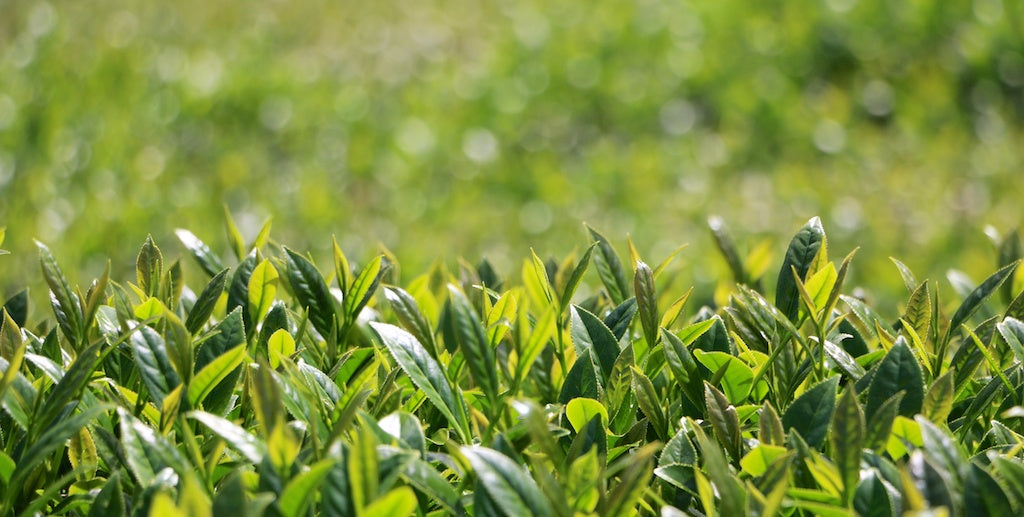
We made it to the factory just before dark. It turns out we had come in on the wrong road! Anyway we made alive, and just in time for a couple rounds of last year's excellent spring tea before a gracious dinner with the farm staff and management. We resumed drinking tea after dinner. This time we drank the farm boss Mr. Cai's personal stash (even though he was in Taipei on business) of winter tea which had sold out days after it was produced. Then we had some of their exclusive, high quality, small batch high mountain black tea. It's very good. It's only made in the summer from the tippy sprouts, so the amount is very small.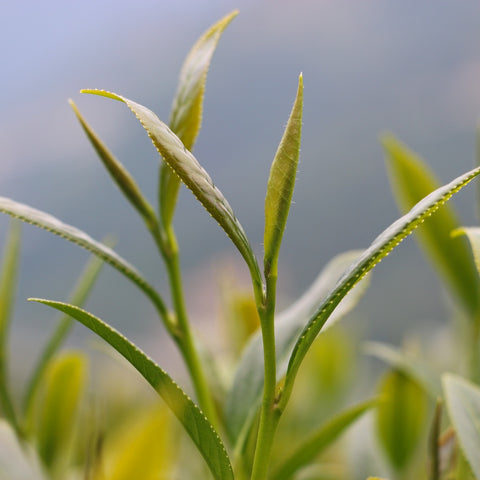
I have a good connection with Mr. Cai, the farm's owner. We had met at a few tea expos in Taiwan and we really get along well. He's very friendly and immediately took a liking to me and is always very excited when we meet. He even told me that if he had a daughter, that he would want to marry her to me. I take that as a compliment! Thanks to our good connection with Mr. Cai we were generously offered a very comfortable room in which to stay the night. My companions had already booked a room in Puli for the night but since we were all terrified at driving back on that dangerous back road we came in on, we made some calls to try to cancel the reservations. Besides, we really wanted to stick around till the morning so we could make the 45 minute drive up to the tea fields and see the beautiful fluorescent green sprouts that were days away from harvest. Luckily things worked out in our favor and we went to bed early so we could go see the tea fields first thing the next morning.
 The road up to the tea fields was just as scary as the road we had come in on the previous evening. It was of some comfort that we were in a 4-wheel drive, rather than the Toyota Corolla we had driven in. On the 1000m climb up to the tea fields we passed through groves of ancient trees, colorful, rare birds and past Taiwanese aboriginal people who were riding down the mountain on motorcycles.
The tea fields were spectacular, as was the view from our vantage point at 2000m above sea level. The bright green sprouts were jutting above the sea of darker green older leaves. The tea bushes were full of new spring shoots and within days of being harvested. It is crucial that the leaves are harvested at just the right time for optimum flavor. There's a 3 day window to pick the leaves. If they're plucked too early the tender new growth will produce bitter tea, if they're plucked too late they're too old.
The tea is currently being picked and we'll be getting the first samples in the mail within a few days. We're anxiously anticipating it's arrival of the spring tea as this year was a snow year in Taiwan. Snow years are legendary for producing great tea!

Visiting the farm: Organic Red Jade #18 in Taiwan
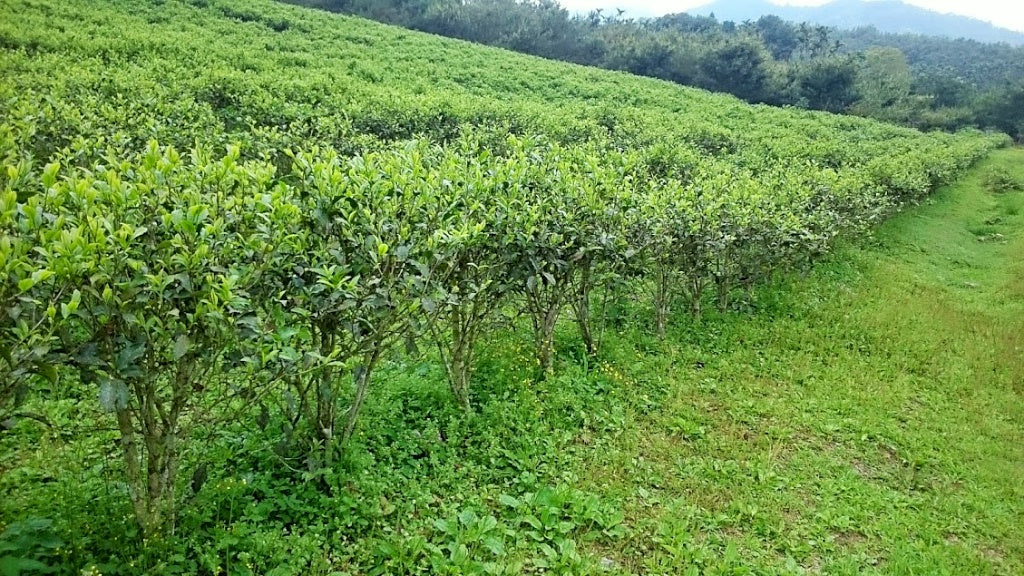 My wife Spring and I recently took a trip to connect with some of our tea farmers in Nantou. The second stop on our journey was the Yu Shan area where we spent time with Mr. Ou, his wife and 3 sons. He was gracious to invite us to his house for dinner and to spend the night. Mr. Ou is the Yu Shan area tea farmer and maker of three teas in our collection. He makes our Caramel Oolong, Yu Shan Tie Guan Yin and Yu Shan Black, all teas that we offer exclusively on our site. These teas are not available for sale anywhere else outside of Taiwan.
We were planning to head to the Sun Moon Lake area the following day and Mr. Ou mentioned to us a friend of his who grows Red Jade #18. We got in touch with Woody, the farmer's nephew while we were on the road, and he invited us to meet him at his uncle's house for tea in the evening. We had trouble finding the place. It was way out in the Taiwanese countryside. Google maps was coming up with different results every time we entered the address. After a bit of a wild goose chase we connected with Woody and followed him through the winding dark back roads to his uncle's farm.
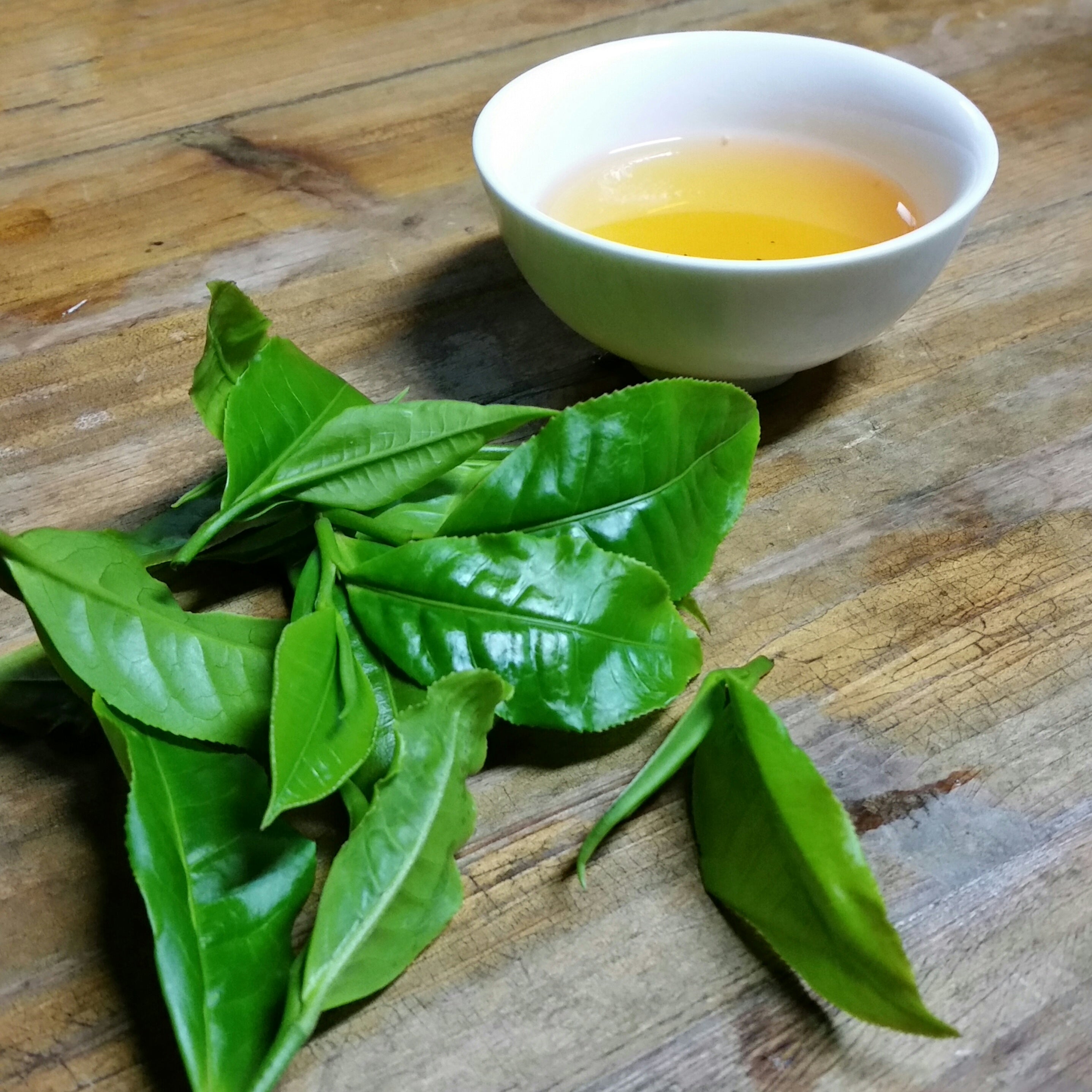 Mr. Wang graciously offered to pour us tea outside of his simple corrugated metal house that sat in the middle of his two crops. One being Red Jade #18, the other being rather large pine trees for bonsai. It was a chilly winter night and he lit a small stove with longan wood charcoal that he put under the table to keep us warm. His tea has a beautiful amber red color and crystal like transparency. It is also very clean and smooth, a result of his passion and care in using organic farming methods. Mr. Wang loves tea and has been making tea for more than 30 years. He originally began in Lugu, working as a tea maker, making Dong Ding oolong. He later decided that he wanted to grow and make his own tea and do it organically in order to make the best tea possible.
 After enjoying a few pots of Mr. Wang's best tea. He grabbed a few flashlights and invited us to take a look at his tea plants. We could tell when we got there that he couldn't wait to show us his tea fields. We walked around the back of his house through groves of giant bonsai trees to get to the tea plantation. There were many holes in the ground dug out by endangered Pangolin's which which find refuge on his organic farm digging for worms late at night.
 When we got to his neat widely spaced rows of tea he picked two leaves and one sprout of the tender light green buds that jutted out above the darker green leaves, to show us his high leaf plucking standards. He picked a handful of leaves and told me to put them in my pocket and smell them later. He then aimed his flashlight toward the ground. The tea bushes had massive trunks. As a grower of bonsai, Mr. Wang used a very unique cultivation method in his tea fields. He kept the rows widely spaced from each other so that the roots penetrate deep into the soil to gather nutrients and water. The result of his these efforts is prize winning black tea.
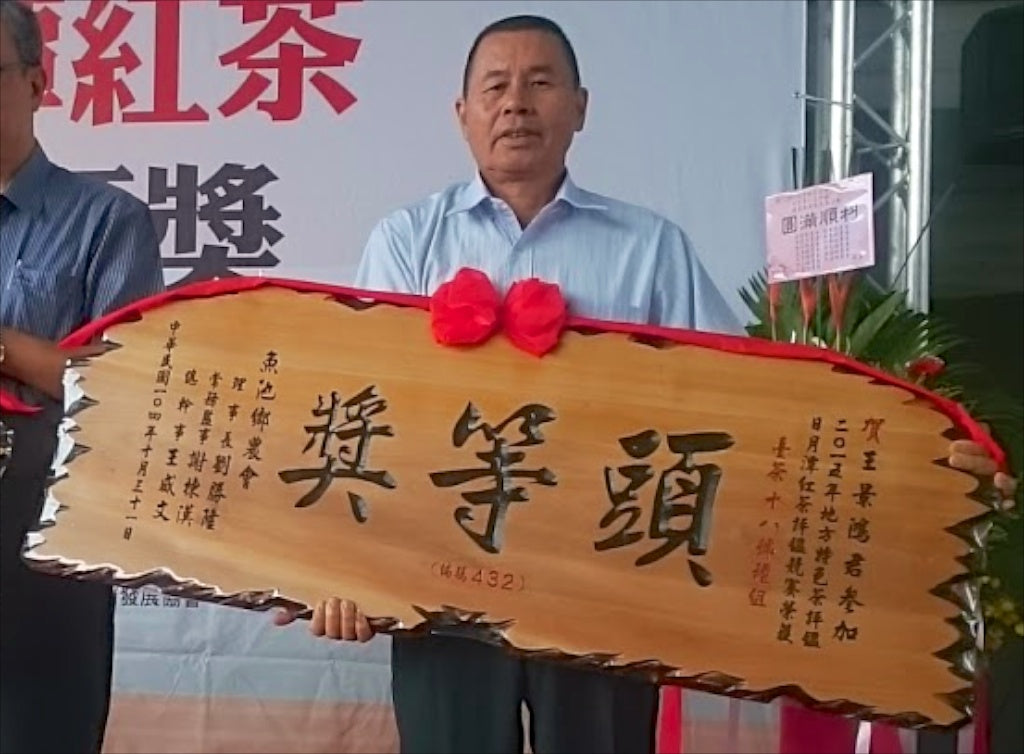 Mr. Wang proudly accepts his first place prize from the Yu Chi Farmers association.
In an effort to support Mr. Wang in his efforts in organic tea farming we have a very limited quantity of his Spring 2016 Organic Premium Red Jade #18 for sale on our site.

Oolong or not Oolong?

I recently had the pleasure of meeting Tea master David Tsay, and his daughter at his tea space in Taipei. He was a very humble and gracious host. David made me some of his organic tea and I showed him some of the teaware I had made.
We had some conversations about tea varieties commonly used to make oolong tea in Taiwan. We got onto this topic since I told him that several tea growers had told me that real, genuine oolong tea could only be made from the Qing xin oolong variety. David gave me a better explanation.
The name "Oolong" has two meanings. One refers to tea plants of the oolong strain. The other refers to the processing tea goes through after being picked. Qing xin oolong is the most common tea strain used in Taiwan as it is prized for it's flavor. The Qing xin oolong strain originated from tea plants of a different name in Fujian province and was brought to Taiwan about 100 years ago. Over time this variety from Fujian developed distinct characteristics of it own and became known as Qing xin oolong.
Farmers in Taiwan say that to make real, authentic oolong only Qing xin oolong can be used. David however said that wonderful oolong teas could also be produced from different tea varieties. Even though Qing xin oolong is the most traditional oolong variety used to make tea in Taiwan, it didn't mean that other tea varieties processed as oolong teas were not real oolongs. I had to agree since the organic oolong tea we were drinking, which David is a huge proponent of was made from the Si Ji Chun (four seasons) variety. Actually because the Si Ji Chun plant is heartier and more resistant to insects, it is a good strain to use for growing organically.
It was a great pleasure to meet tea master David Tsay. He made wonderful tea and was very gracious. He had some wonderful suggestions regarding teaware as well and offered to work with me in the future in developing my pottery which would be a huge honor for me.

A video blog post: The Magic of Wood-Firing

A tale of two teas: how processing affects tea flavor

Both of these teas are from the same Jin Xuan bushes. The leaves on the left are slightly more dull and their shape less beautiful. The leaves on the right are brighter in color, shinier and are rolled into a nicer shape. So which one would you buy? Most people would choose the tea on the right, which is a logical choice since it looks better in all aspects. See the next picture to find out the difference between these two teas.
Again, these two teas are made from the leaves of the same plants. Looking at the color of the tea which one would you choose? Again the tea on the right looks more clear and has a beautiful bright yellow color, while the tea on the left is dull and dark. And now for the more important question. Which one tastes better? On all accounts, so far the tea on the right looks much better. It even has a brighter fragrance and smells more floral. Its in drinking these teas that there is a noticeable difference that makes us reconsider all the beauty and fragrance the tea on the right has provided us with so far. While drinking the tea on the right it seems to disappear in the mouth. There is no mouthfeel in this tea. It still provides a little huigan in the throat but when the tea hits the tongue and is in the mouth it really feels empty. In contrast the tea on the left has much more body and is full flavored in the mouth. The flavor fills the mouth from the sides of the tongue, down to the throat. The whole mouth is filled with the body of the tea. Everything would lead you to choose the tea on the right but after drinking these two teas, you would choose the one on the left.
Where do these differences come from? The tea on the left was traditionally processed. The tea on the right was processed with a machine that compacts the leaves making a more beautiful tea on all accounts but one that severely compromises the flavor and mouthfeel of the tea. The reason this machine is being used more and more frequently is because it saves a huge amount of labor. Tea workers are refusing to work in a tea making facility without the compacting machine because they (very understandably) don't want to do the extra manual labor.
This is a problem more and more tea makers are being faced with. In order to produce tea, workers are demanding to use this machine and don't want to work at a place without it. Because of this the farmers are being forced to purchase the machine, or else they cannot hire labor. Unfortunately tea produced this way is inferior in flavor. Fortunately, for now this grower doesn't have the compacting machine and the tea he's producing is rich in flavor.
Wood firing in Miaoli, Taiwan
The Jade Leaf aka Emilio and some friends fired a wood kiln in Miaoli, Taiwan last week with some friends. Wood firing is a huge task. I'll break this into 3 posts. This one is the first and shows the preparations involved in getting the kiln and pottery prepared and loaded into the kiln for firing.


Making our own tea
- 1
- 2